Washington state’s growing diversity can be one of its greatest assets – but only if we invest in it. The budget passed late last week by the Senate does not, instead it weakens our state economy and undermines a strong and prosperous middle class.
A number of budget cuts proposed by the Senate would disproportionately harm people of color and people with low-incomes:
- $183 million in cuts to the WorkFirst program hinders opportunities for people to find and keep a job. Communities of color make up nearly 25 percent of the working age population, yet make up over thirty percent of the adult WorkFirst population
- Elimination of cash assistance for disabled adults unable to work due to mental or physical incapacity. Adults of color account for nearly a third of program participants.
- Full elimination of funding for services designed to help low-income families build wealth in order to develop long-term economy security. Asset accumulation in communities of color drastically trails that of white households. Nearly 36 percent of non-white households are ‘asset poor’, meaning they do not have the resources on hand to build future prosperity – such as investing in a home, paying for college or saving for retirement.
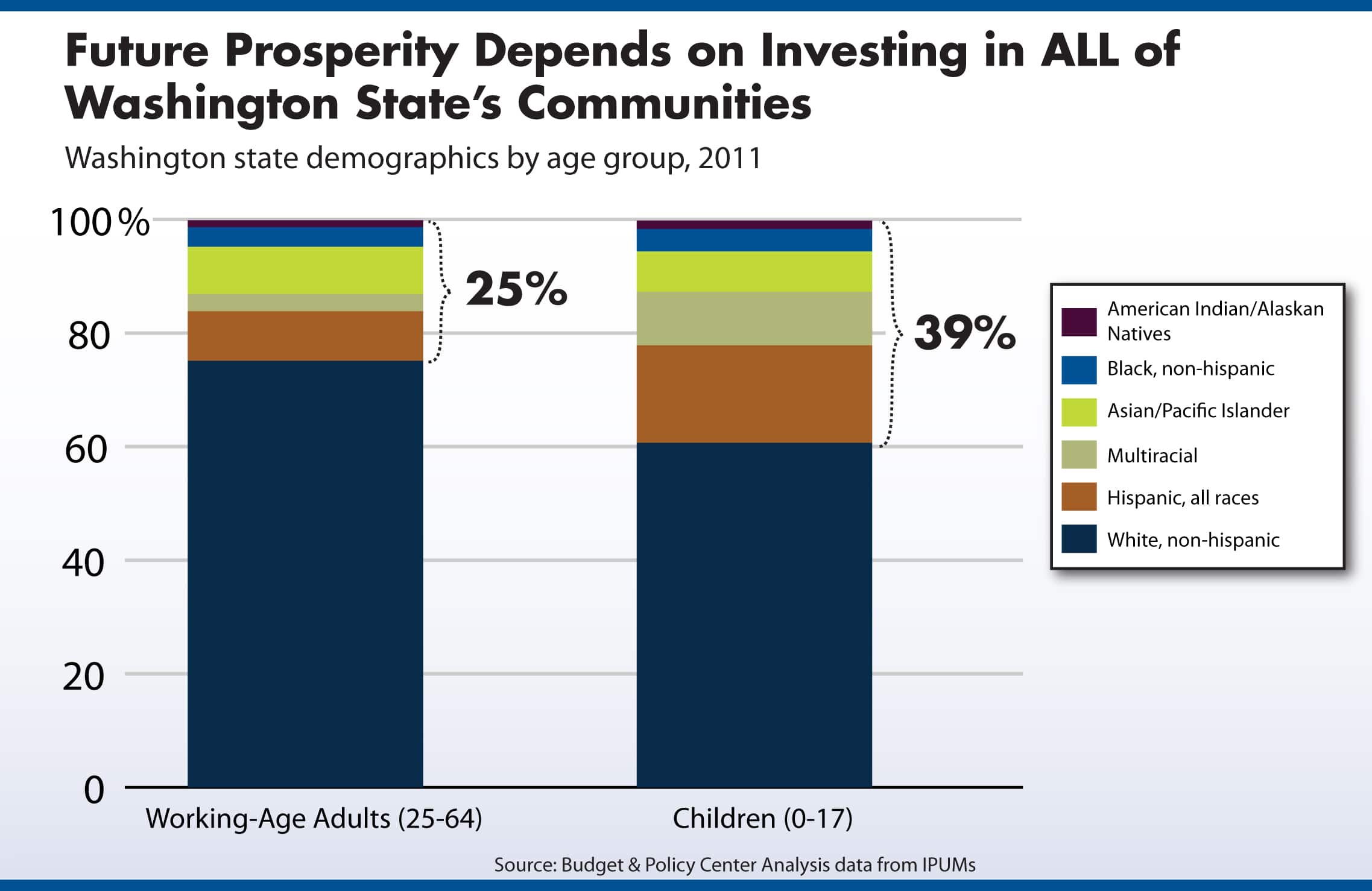
Nearly forty percent of children under the age of 17 belong to communities of color (see graph). Investments that move families and children out of poverty are not only critical for communities of color, but for all Washingtonians. This must become a high priority as demographic shifts will place a heavy economic price on continued racial inequities.
We cannot invest in strong communities, economic security, and healthy people without new revenue. Policymakers must choose to take a balanced approach to the state budget that involves closing tax breaks, broadening our sales tax, and extending current taxes.